
Paint, crumple, set: the crumpled-canvas technique
How Dinelli turns an oil painting into a relief: the painted canvas is crumpled, modelled like a sculpture, then set with resin.
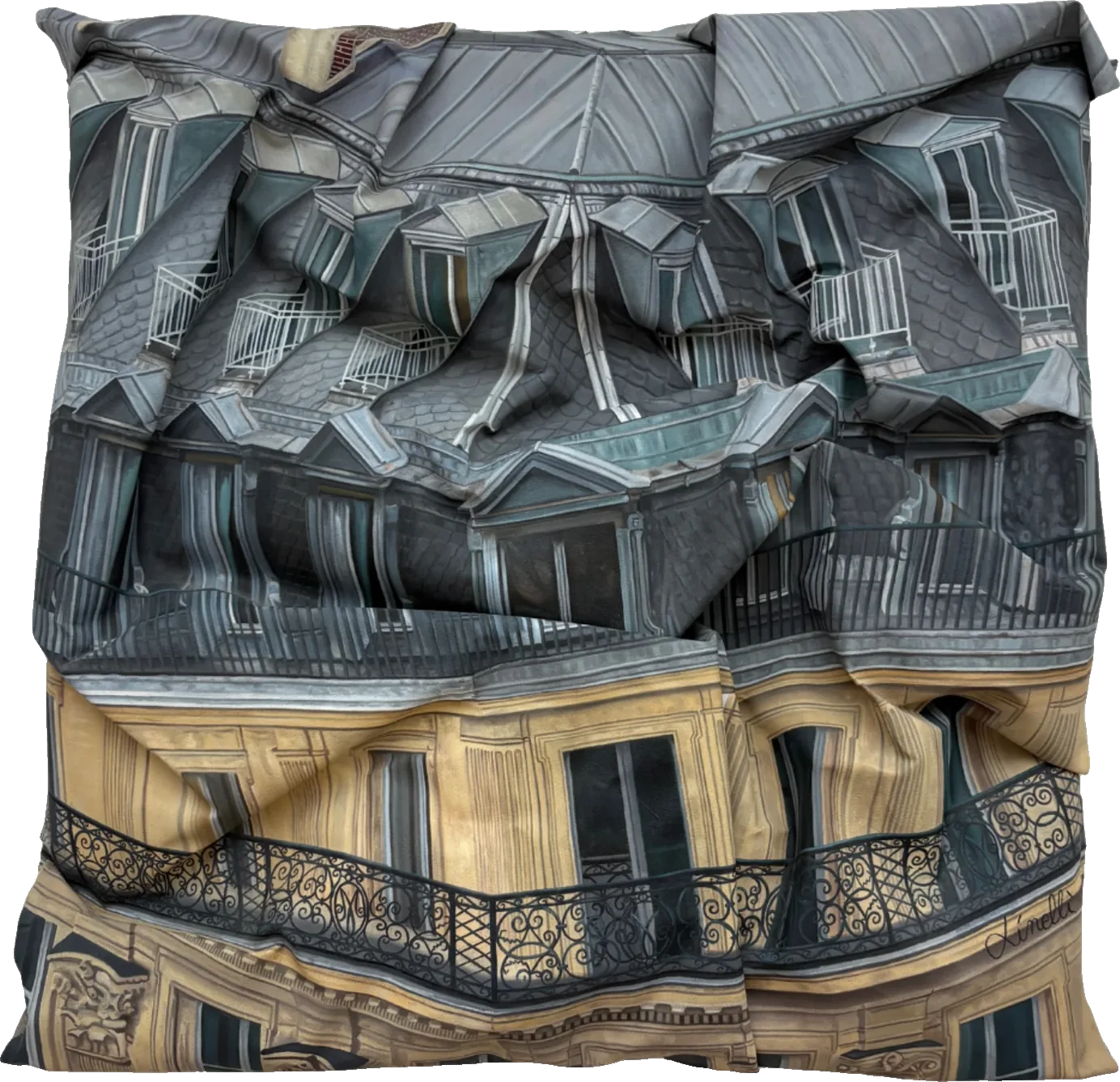
Dinelli's paintings begin as oil paintings: a façade, a stretch of roof, a row of windows, painted on canvas. What sets them apart comes next.
Crumpling
The artist crumples the painted canvas and models it “like a sculpture”. The folds distort the façade: a balcony ripples, a grid of windows buckles like fabric, a graffiti piece breaks into facets. The gesture is, in her words, “both instinctive and controlled”.
Resin
Once the relief suits her, Dinelli sets the canvas with resin. The back is reinforced with epoxy laminate: the canvas keeps its shape, like a bas-relief.
Cords and boxes
Some canvases are crossed with stretched cords, such as Nanterre Nord, Tour Melun or Tour 13 Ouest. Others are shown in a plexiglass box, such as Tours Nuages – Pablo Picasso, Montparnasse and Nid d'abeille – Plaisir.
Why crumple
For Dinelli, crumpled material is a metaphor for the city: “at once solid and shifting, structured and unpredictable”. Her canvases question the durability of architecture, between the temptation of the disposable and a fascination with forms and materials.
All the oil paintings are gathered in the Habitats collection.
Text: Dinelli studio. Quotations: the artist's own writings.
New works
An occasional letter, when a new series or an exhibition is coming. Nothing else.